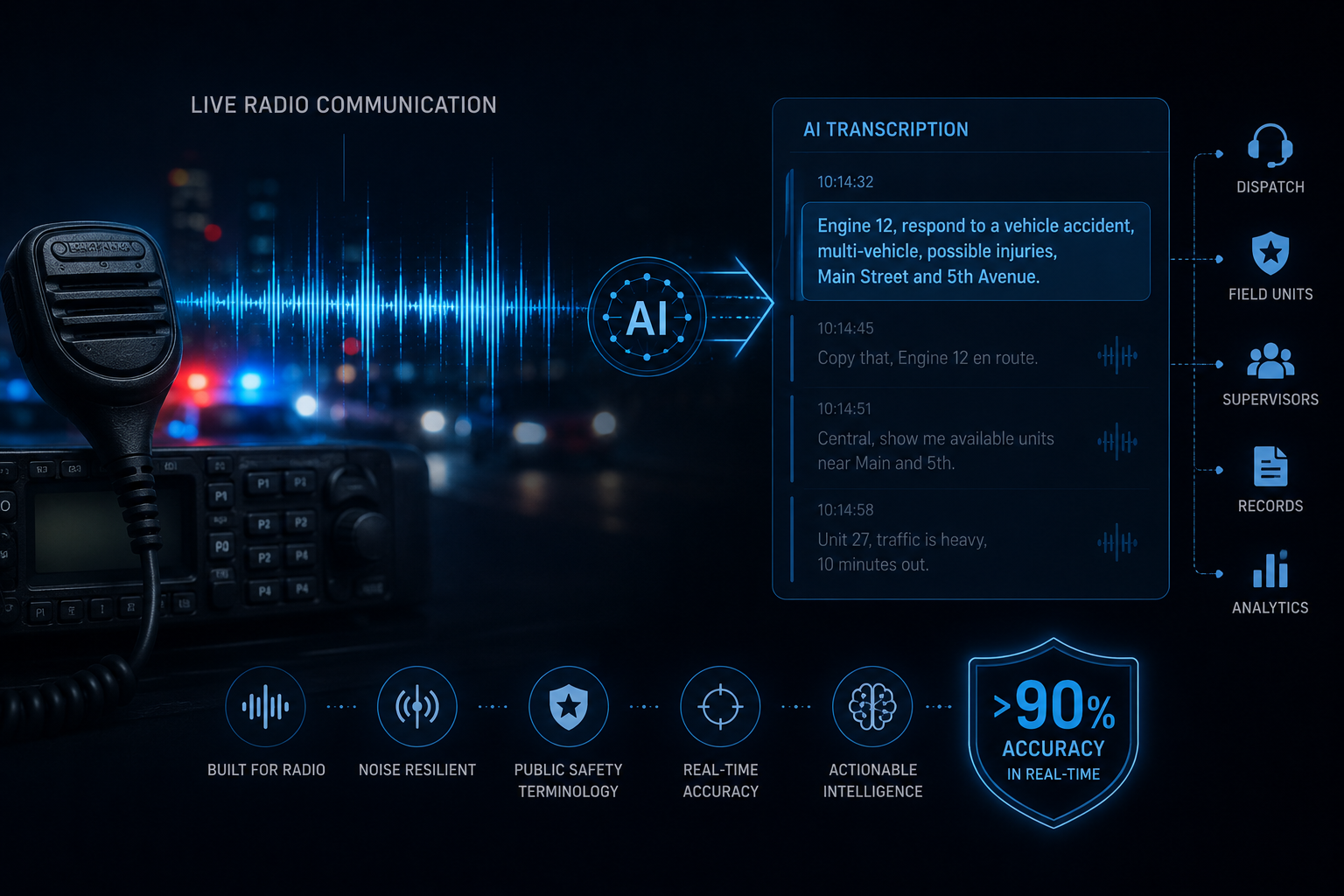
Radio Transcription Built for Public Safety
Every dispatcher trains for years to develop a “radio ear.” Delphini®'s transcription engine was built the same way.
Radio sounds nothing like a podcast or a phone call
Consumer and enterprise speech-to-text platforms are trained on clean audio from phones, meetings, and voice assistants. Public safety radio is fundamentally different: variable signal quality, P25 digital artifacts, simultaneous transmissions, background noise, compressed audio, regional code language, unit identifiers, and rapid-fire dispatching convention.
When you try to run police, fire, or EMS radio through a general-purpose ASR engine, accuracy collapses. Transcriptions miss officer designations, misread code phrases, and lose channel attribution — making the output unreliable for real-time alerting or after-action review.
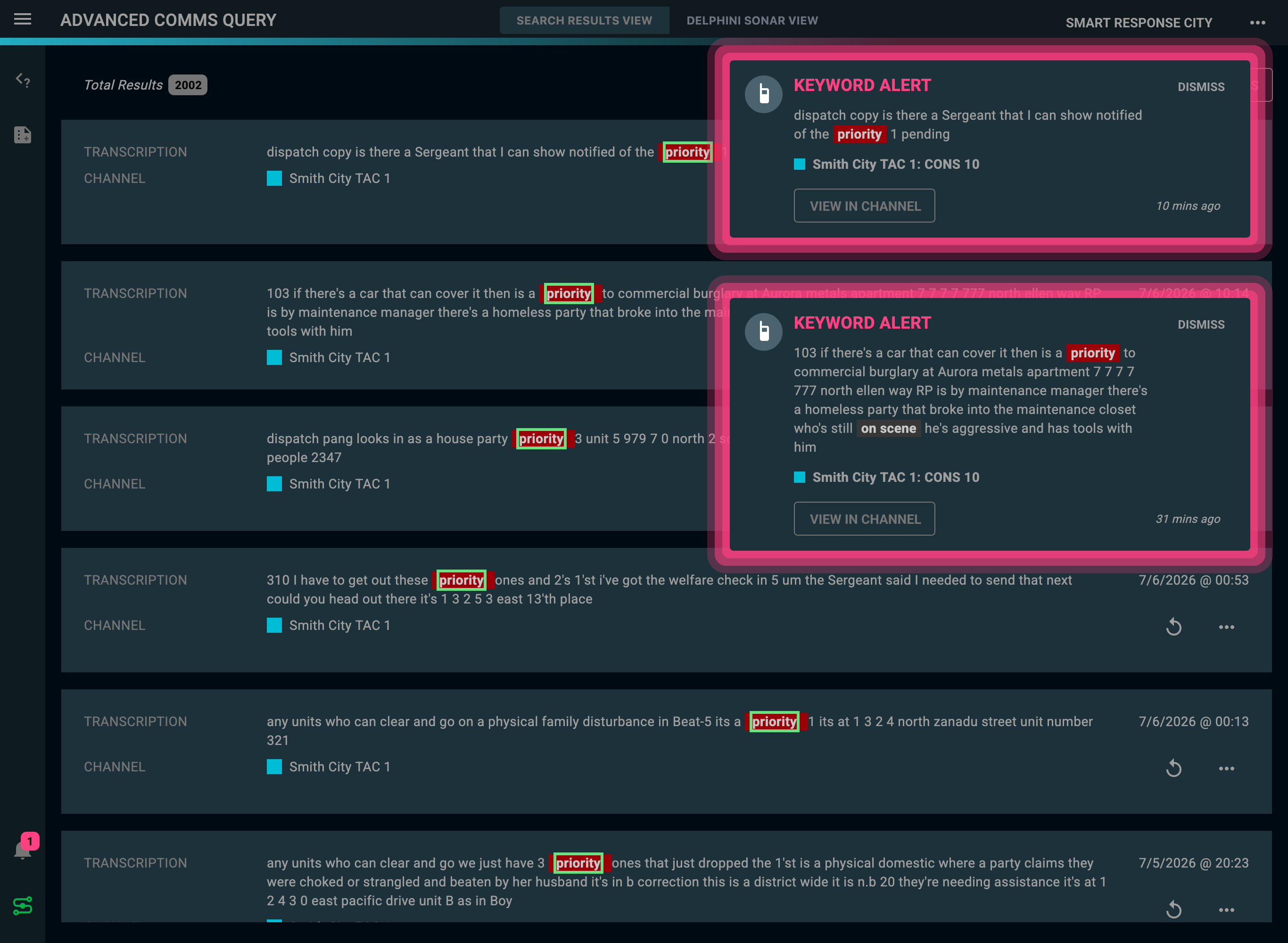
Accuracy engineered for the realities of field radio
For years, our team has been building a homegrown, bespoke transcription model — trained specifically on the operational language of public safety and the acoustic realities of live radio. It's engineered to understand accents, dialects, and vocal inflection under stress, and to cut through SCBA masks, sirens, and background noise that trip up general-purpose speech-to-text engines built for phone calls and meetings, not the fireground.
Spatial Audio Separation First
Before transcription begins, Delphini®'s patented spatial audio separation layer isolates individual voice streams — even from channels with simultaneous transmissions or significant background noise.
Public Safety Language Model
The AI is trained on public safety terminology, radio codes, dispatch conventions, agency identifiers, and regional phrasing — not general consumer speech. The result is accurate transcription of the language first responders actually use.
Real-Time Processing (<2s)
Transcriptions are available within two seconds of transmission — fast enough to power live alerting, supervisor awareness, and incident-as-it-happens context.
Channel Attribution & Timestamps
Every transcription is attributed to its source: radio channel or talkgroup, unit or speaker identifier where available, and precise timestamp. This makes the archive searchable and defensible.